The Vital Guide to Comprehending Screen Printing and Its Versatile Utilizes
Screen printing has an abundant history that goes back to ancient times, advancing into an innovative method used throughout different industries today. This overview explores the details of the screen printing process, describing its applications in marketing, style, and home design - 10:9 Design contact. Understanding these principles can open innovative possibility for both creative and commercial tasks. The complying with sections will certainly expose necessary ideas and methods to boost one's screen printing ventures
The Background of Screen Printing
Although screen printing has origins that map back centuries, its advancement shows the imaginative and technical advancements of various cultures. Coming from ancient China, the technique was initially used for decorating textiles and later infect Japan, where it came to be integral to Ukiyo-e woodblock printing. The method changed to Europe in the 18th century, where it obtained appeal among craftsmens and industrial printers. The creation of photo solution in the 20th century reinvented screen printing, enabling for even more complex designs and better effectiveness. Artists like Andy Warhol further thrust its appeal, utilizing the tool to develop famous works that combined commercialism and fine art. By the late 20th century, screen printing had actually developed itself as a flexible method, employed in vogue, marketing, and art. Today, it proceeds to develop, incorporating digital technology and broadening its applications across numerous markets.
The Screen Printing Refine Explained
Screen printing transforms imaginative visions into concrete designs via a collection of exact actions. At first, a photo is produced and afterwards transferred onto a screen, commonly made from great mesh material extended over a frame. A light-sensitive emulsion is applied to the screen, which is subjected to light, hardening in areas not covered by the picture. After cleaning out the unhardened emulsion, a stencil is created.
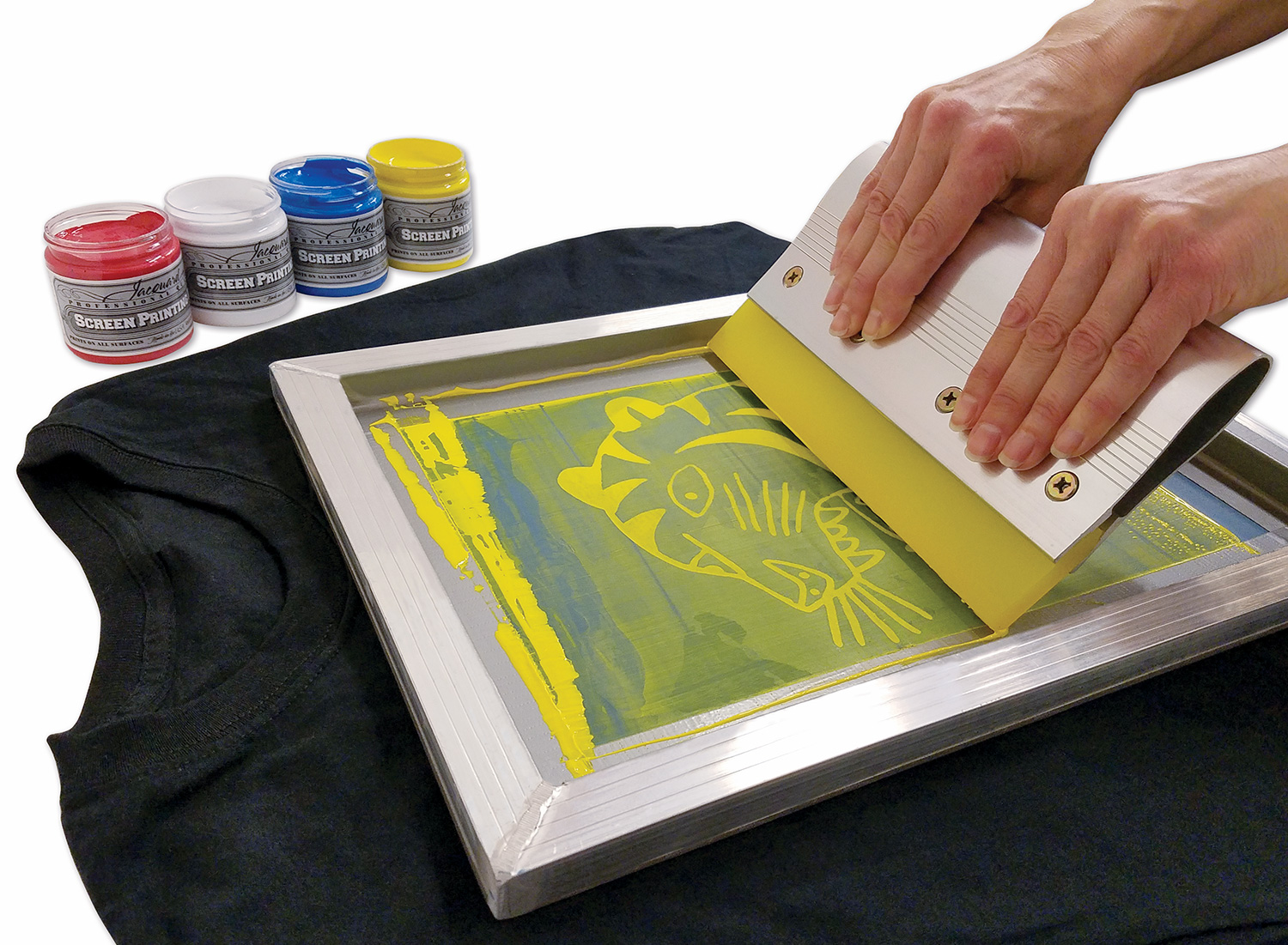
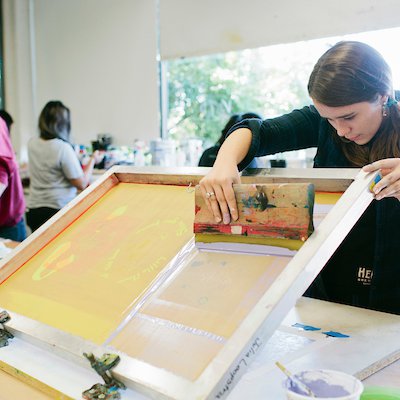
Next off, the screen is put over the substrate, whether it be material, paper, or another material. Ink is after that pushed with the open locations of the stencil utilizing a squeegee, transferring the style onto the substratum below. This procedure can be duplicated for several colors, requiring separate displays for each and every hue. The printed item is cured making use of warmth to ensure the ink adheres correctly, resulting in a resilient, dynamic style prepared for use.
Kinds Of Screen Printing Techniques

In addition, specialty methods, such as discharge screen printing, eliminate color from the textile to develop softer prints, while foil screen printing applies metal foil to accomplish a glossy coating (10:9 Design Screen Printing). Each method provides distinctive qualities, accommodating various creative requirements and production scales, eventually broadening the possibilities within the screen printing domain name
Applications of Screen Printing in Different Industries
Additionally, the signs and advertising sectors utilize screen printing for developing captivating displays and banners. This approach permits for strong colors and elaborate designs that catch focus. In electronics, screen printing is used for using conductive inks to circuit card, necessary for element links. In addition, the home decoration industry welcomes screen printing to produce distinct styles on textiles and wall surface art. Overall, screen printing functions as an essential device throughout varied areas, boosting products with individualized and visually enticing graphics.
Tips for Successful Screen Printing Projects
While carrying out a screen printing job, mindful attention to detail can considerably improve the final result. Selecting high-quality products is important; this consists of the screen, inks, and substrates. Utilizing appropriate mesh counts can influence ink deposition and information resolution. Preparation is just as essential; detailed cleaning of screens and proper exposure times guarantee crisp prints.
Next, accurate registration is essential for multi-color prints. Making use of positioning devices can assist achieve specific layering. Furthermore, testing prints on scrap materials prior to manufacturing more info aids recognize possible problems without wasting sources.
Often Asked Concerns
What Materials Are Best for Screen Printing on Textile?
Cotton and polyester blends are suitable for screen printing on material due to their toughness and ink absorption. Furthermore, specialized materials like silk or canvas can create unique appearances and surfaces, enhancing the total style quality.
How Do I Clean and Maintain Screen Printing Equipment?
To clean and keep screen printing tools, one need to regularly clean displays with suitable solvents, check mops for wear, lubricate relocating components, and store all items in a completely dry, dust-free environment to lengthen their life-span.
What Are the Ecological Impacts of Screen Printing?
Screen printing can have substantial ecological effects, including chemical waste from solvents and inks, water use throughout cleaning procedures, and power intake. Green products and sustainable methods are crucial for decreasing these adverse effects.
Can Screen Printing Be Done in your home Successfully?
Screen printing can be efficiently done at home with the right materials and strategies. Enthusiasts can produce top quality prints, though success depends upon their ability degree, tools, and understanding of the procedure involved.
What Are the Expenses Associated With Starting a Display Printing Organization?

Beginning a screen printing organization entails expenses for tools, materials, and work area. Initial expenses generally vary from a couple of hundred to several thousand bucks, depending upon the range, high quality of machinery, and wanted production ability.
Screen printing has a rich history that dates back to ancient times, developing right into an advanced technique utilized across different sectors today. One more strategy, rotary screen printing, uses cylindrical displays, helping with continual printing on material rolls, therefore improving performance for large-scale manufacturings. Additionally, specialty strategies, such as discharge screen printing, remove color from the fabric to develop softer prints, while foil screen printing uses metallic foil to achieve a shiny coating. In the fashion market, screen printing is extensively utilized to develop vibrant styles on garments, allowing brands to display their distinct designs. Cotton and polyester blends are perfect for screen printing on textile due to their durability and ink absorption.